M0601C-111 Motor Selection for Compact Service Robot Chassis
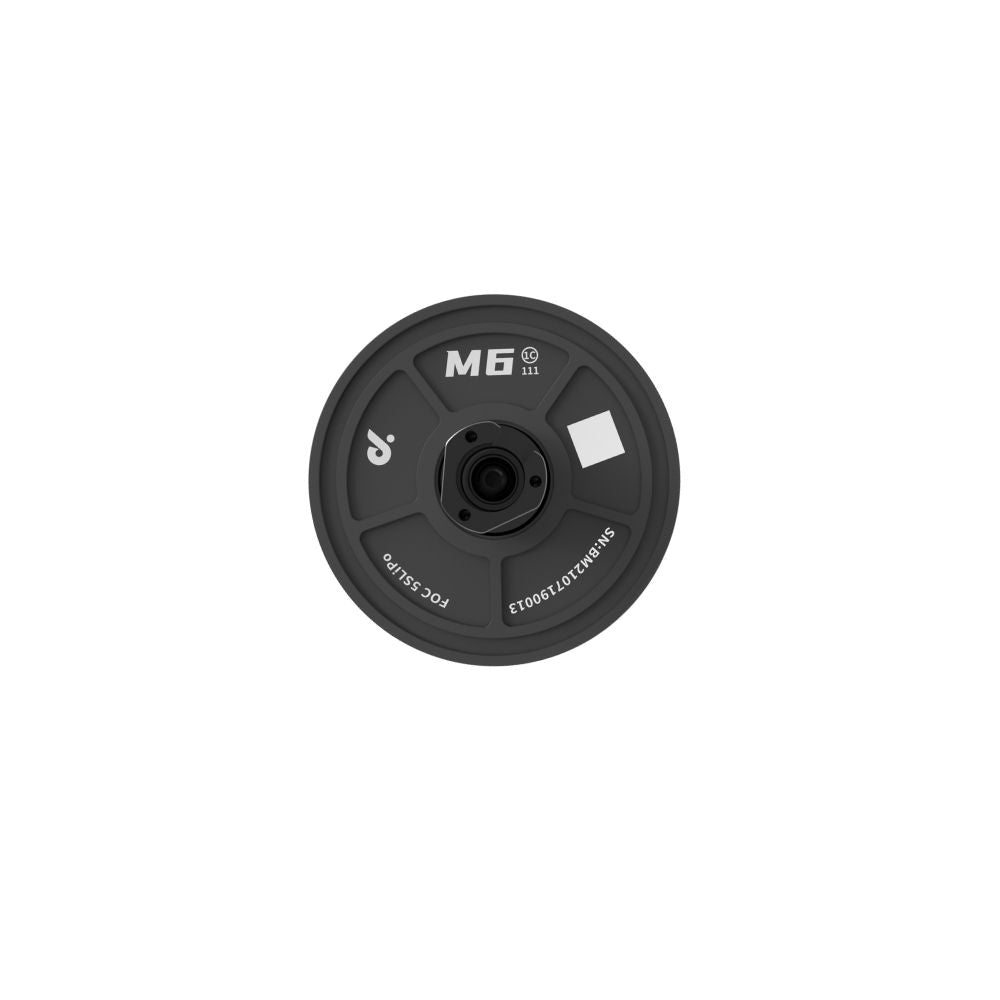
M0601C-111 is a compact direct drive motor designed for robotic platforms that require precise speed control, stable torque output, and efficient mechanical integration. For service robot chassis applications, motor selection depends on wheel size, robot mass, payload capacity, operating speed, slope capability, and control requirements. A 30 kg mobile robot with 150 mm wheels typically needs several N·m continuous torque and higher peak torque during acceleration or ramp movement. The Direct Drive M0601C-111 provides a compact solution for autonomous robots requiring reliable movement in indoor environments.
A compact service robot chassis places strict requirements on the motor system because the platform must combine mobility, accuracy, and long operating time within a limited mechanical space. Commercial service robots introduced between 2018 and 2025 commonly use wheel-based drive systems with operating speeds between 0.5 m/s and 2 m/s, while many indoor robots operate continuously for 8–12 hours per charging cycle. A motor used in this application must provide sufficient torque at low speed, maintain efficiency during repeated acceleration, and communicate accurately with the robot controller.
A motor rated only by maximum speed does not provide enough information for robot design. Wheel diameter, total mass, floor condition, and acceleration requirement determine whether the motor can perform correctly.
The mechanical requirement starts with calculating the force needed to move the chassis. For a robot weighing 30 kg with a 150 mm wheel diameter, the rolling resistance on a smooth indoor floor is often around 1–3% of the total weight. When climbing a 10° slope, the required force increases significantly because the motor must overcome gravity resistance. In practical designs, engineers normally reserve 30–50% additional torque capacity above the calculated continuous requirement to handle payload changes and short peak loads.
| Parameter | Typical Service Robot Range |
|---|---|
| Robot mass | 15–50 kg |
| Wheel diameter | 100–250 mm |
| Operating speed | 0.5–2 m/s |
| Continuous operation time | 8–12 hours |
| Safety torque margin | 30–50% |
Torque selection directly affects acceleration performance and mechanical reliability. If the motor torque is insufficient, the robot may require longer acceleration time, consume more current, and experience unstable movement when carrying additional payload. A properly selected motor maintains smooth speed changes without operating near its maximum output for extended periods.
The Direct Drive M0601C-111 motor design is suitable for compact chassis systems because direct drive structures reduce the number of mechanical transmission components between the motor and wheel. Traditional geared systems may introduce backlash, additional friction, and maintenance requirements after long-term operation. Direct drive solutions can provide more accurate motion response because the motor output is directly controlled without intermediate gear stages.
Direct drive systems are often selected when positioning accuracy and smooth motion are more important than achieving extremely high output torque through mechanical reduction.
Motor voltage and electrical compatibility must also match the robot power architecture. Many compact autonomous platforms use 24 V or 36 V battery systems, with motor currents commonly ranging from several amperes during normal movement to higher values during acceleration. Operating a motor close to its rated voltage generally provides better efficiency and more stable thermal performance.
A service robot that weighs 25 kg and moves at 1 m/s may consume significantly different power depending on floor material. On smooth tile surfaces, energy consumption can be reduced by approximately 10–20% compared with rough carpet surfaces. For robots operating more than 10 hours per day, motor efficiency directly affects battery size and charging frequency.
Motor control capability is another important factor in chassis design. Modern autonomous robots usually rely on closed-loop speed and position control. Encoder feedback allows the controller to measure wheel rotation and adjust motor output in real time. In navigation systems using wheel odometry, encoder accuracy directly affects estimated travel distance and turning angle.
| Control Function | Application |
|---|---|
| Speed control | Maintaining stable cruising speed |
| Position control | Accurate turning and docking |
| Current control | Managing torque output |
| Encoder feedback | Improving movement accuracy |
For autonomous mobile robots developed after 2020, encoder-based control has become common because navigation algorithms require consistent wheel movement information. A difference of only 1%–2% in wheel speed between left and right motors can accumulate into noticeable position errors after long-distance movement.
Thermal performance must also be considered because service robots often operate repeatedly throughout the day. Motor temperature increases when current rises during acceleration, slope climbing, or carrying heavier loads. Continuous operation at high current can reduce component lifetime and affect control stability.
A typical validation process measures motor temperature, current consumption, and speed response under different loads. For example, a 60-minute continuous movement test with a fixed payload can show whether the motor remains within the recommended operating temperature range. Many robotic manufacturers perform multiple load tests before integrating motors into production chassis, with testing cycles often exceeding 100 hours for commercial platforms.
Mechanical installation space is another reason compact motors are selected for service robot applications. Small chassis designs require the motor, controller, battery, sensors, and structural components to fit within limited dimensions. A motor with compact dimensions allows engineers to reduce chassis height and improve the placement of batteries and electronic components.
Compact motor integration allows more space for sensors, computing modules, and battery capacity without increasing the overall robot size.
The wheel and motor combination should also be evaluated together. Larger wheels improve obstacle crossing ability but require higher torque. Smaller wheels reduce torque demand but may reduce ground clearance. For indoor delivery robots, wheel diameters between 120 mm and 200 mm are commonly used because they provide a balance between stability and mechanical size.
A practical selection process normally includes several stages:
-
Calculate the required wheel torque based on robot mass, slope angle, acceleration, and friction.
-
Compare the calculated requirement with continuous and peak motor torque specifications.
-
Verify voltage compatibility, controller communication, and encoder support.
-
Test the assembled chassis under realistic payload and operating conditions.
The M0601C-111 motor can support applications including indoor delivery robots, inspection robots, hospital service platforms, and autonomous mobile robots. These systems usually require precise movement rather than high-speed transportation, making stable low-speed control and accurate feedback important design considerations.
From 2019 to 2025, the service robot market has increasingly adopted compact electric drive systems because manufacturers require smaller platforms with longer operating time and improved navigation accuracy. Motor systems that combine compact structure, direct transmission, and closed-loop control are widely used in these applications.
Selecting a motor for a service robot chassis requires matching electrical specifications with mechanical conditions, operating environment, and control requirements.
A properly selected M0601C-111 motor can provide stable movement performance when integrated with suitable wheels, controllers, and chassis structures. The final design quality depends on accurate load calculation, sufficient torque margin, thermal evaluation, and long-term operational testing rather than motor specifications alone.